Showing posts with label Shanghai. Show all posts

Sunday, December 10, 2006

Shanghai - love you long time girls

There aren’t as many fugly, old white guy and sexy, young local girl couplings as there are in Singapore, Malaysia and Thailand. Most of the interracial couples I saw looked genuine. My mum said that SPGs (Sarong Party Girls) weren’t as common in China because not many girls speak English. The funniest thing I saw was a card advertising pretty, scantily clad “masseurs”. Men were handing them out in front of my hotel. I wanted the whole collection of these scandalous cards written in broken English.

This was my favourite card. It says on the bottom - "Our aim is to think of what you think, anxious of what your worry". So I'm quite worried about global warming and the reemergence of Pauline Hanson in politics. Wouldn't it be great if this massage girl could carry this anxiety for me?

Our aim is to think of what you think, anxious of what your worry

The girl in the lingere does not look happy. It looks like she is being forced to pose to prevent her family from being killed by the pimp's hitmen. This is sad but true. Put a smile on your face darl, you are going to have an illustrious career of massaging overweight white men.

Shanghai - Lost in Translation

I felt like Scarlett Johanssen in Lost in Translation while I was walking aimlessly around the city and hanging out in my nice hotel. I thought the film was overrated when I first saw it in July last year, but I have a new found respect and love for it now since I watched it again on the plane ride home.

Because I am Chinese, the locals in Shanghai of course spoke Chinese to me. My white friend had to be my translator. The English speaking levels in Shanghai are very poor. No matter where I go in Asia, people will probably speak their local language to me. Well, I guess that makes sense. In Australia we don’t change our language when we come across someone who speaks a different language.

Shanghai - nightlife

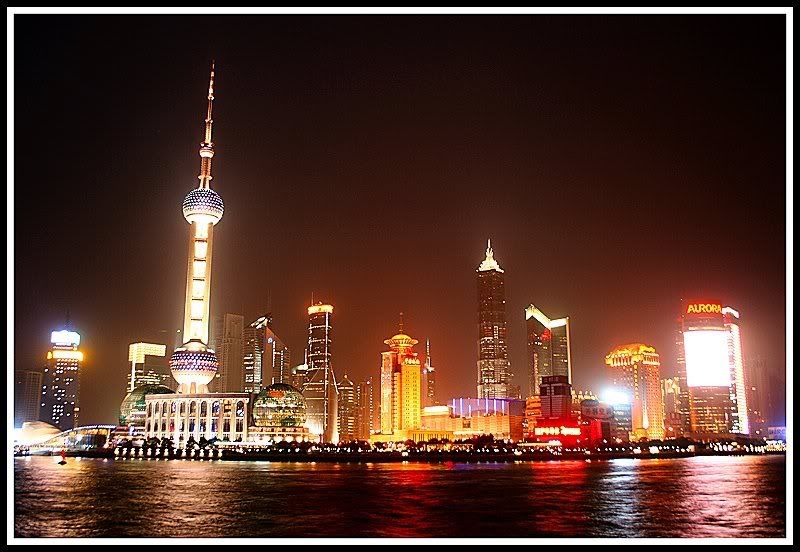
Sitting at a bar or restaurant along the Bund is a pastime of rich locals and expatriates. All the bars are pretentious and expensive, except for one that I read about in the local bar guide – the Captain bar. The Captain bar is above the Captain Backpackers hostel. The bar is dark, relaxed and cosy. The balcony of the bar is modelled as a ship deck. Sit here to enjoy the view of Pudong and watch advertising projected onto buildings and on billboard sized TV screens floating across the river on boats. The Captain Bar is probably one of the cheapest bars along the Bund, but the prices are the same or even slightly higher than any bar on Brunswick Street. This is the view that can be seen from the Captain Bar:

Pudong

Cheaper drinks can be found in other areas of town. Trent told me of a bad nightclub called Windows, where we could find really cheap drinks, sleazy twenty year old American frat boys and slutty local girls.

Frat boys. KEG KEG KEG KEG KEG

chiggerI was curious to find out how bad it was, so we headed to Windows. It was full of trendy young locals and a few expatriates looking for a local girl with a white fetish. Yes, the drinks were cheap, but it was one of the worst nightclubs I’ve been to. Ok, so urban (i.e. hip-hop and R & B) nightclubs are not my scene at all, so if you enjoy being slutty and trendy while grinding to “The Best of Hip-Hop: 1990-2006”, Windows is probably for you. Hip hop, R & B and hard electronica are the most popular music genres amongst Gen X and Y in Asia. The nightclubs in KL played the exact same set list as Windows, and Trent said they played the same set in Tokyo too. The set always features “Hip Hop Hooray” by Naughty by Nature, Destiny’s Child, “Birthday” by 50 (“fidy”) Cent and “Gold Digger by Kanye West. I have a few theories as to why urban music is the most popular amongst Asians. Firstly, they aren’t exposed to a wide range of genres. The local radio and MTV play Chinese music or top 40 from the U.S. which comprises mostly of urban music. Secondly, Asian Americans and Asian Australians relate to the African Americans in being a marginalized society. Thirdly, mainstream urban music is all about the bling and logos. Watch the videos, listen to the label name dropping in the lyrics. Asians are extremely materialistic. They can relate to or aspire to be like the polished upper-class urban artists more than dishevelled white rockers. The young Chinese don’t want to look grungy, otherwise they’ll be perceived as poor.

Shanghai - sightseeing

The Yu Yuan Gardens is nothing but a block of replicated buildings from the Ming Dynasty. It looks like a Disneyland version of China. The best dumplings in Shanghai can supposedly be found here. We would have waited for over an hour to get our serving, so we gave it a miss. How much better can a dumpling taste anyway? The queue for the dumplings comprised of Chinese and Western tourists. I read on a website that this is where locals buy dumplings too, but this statement was written by an American who probably assumed that the Chinese people lining up were from Shanghai. I knew they were all tourists by the cameras hanging around their necks and the Chinese tour buses. At the Yu Yuan Gardens you can also buy traditional Chinese foods such as a Big Mac, Kentucky Fried Chicken and an Iced Mocha Frappachino. There were plenty of souvenirs for sale too. The Yu Yuan Gardens was pretty much a shopping centre set in a traditional Chinese building, with a food court too!

Starbucks at Yu Yuan Gardens. A traditional Chinese beverage venue.

I experienced old school China a few blocks away from the Yu Yuan Gardens. We walked down a narrow street that comprised of a row of tiny 4-seater restaurants and fruit shops. The wooden window shutters of the apartments above the shops were blackened by the dirt accumulated over the past centuries. Now this was the China I wanted to see.

Another few blocks away was the French Concession. The French Concession is a maze of tree lined streets and European architecture. Many expatriates live here. There are many cute boutiques that are less of a headache to browse through than the Xi Pu market, but of course, sell the same clothes at a higher price.

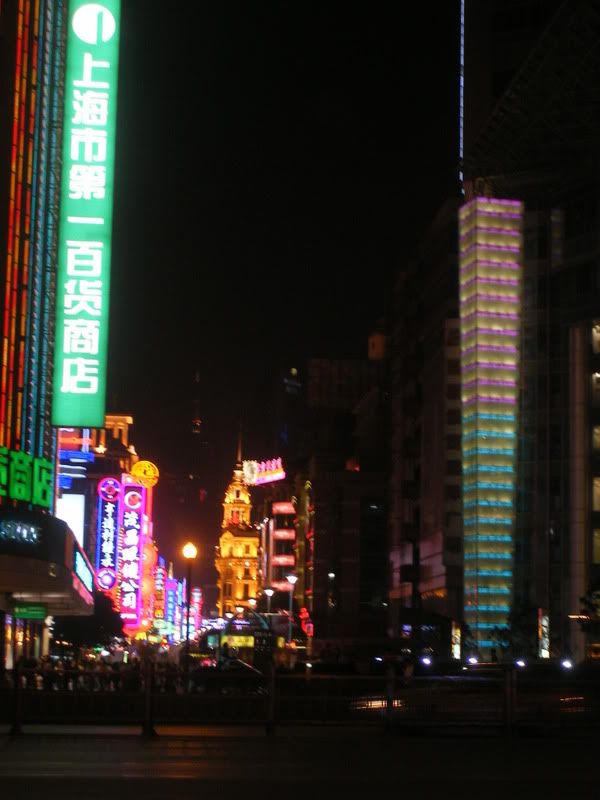
You don’t need a taxi to get around Shanghai. I walked from Nanjing Road West to East to get to the Bund at the end of the road, and from Nanjing Road East to the Yu Yuan Gardens and then the French Concession, that connects back to Nanjing Road West. It is a fair distance to walk, but it is a better way of exploring the city than travelling in a cab.

The Bund features a mix of old European and American architecture. They were impressive buildings, but they didn’t take my breath away like the upper end of Collins Street does. The Bund is along a river and on the other side is the town of Pudong, which is primarily an area full of business buildings and one of Shanghai’s two Hooters. Pudong is attempting to rival the glittering skyline of Hong Kong, with new building being erected every few months. Pudong is also in competition to build the tallest building in the world.

Here are some pictures of the Bund:

The Bund
In a little street off the Bund.

This is a man cleaning a bridge along the Bund. Work safety regulations in China are non-existent.


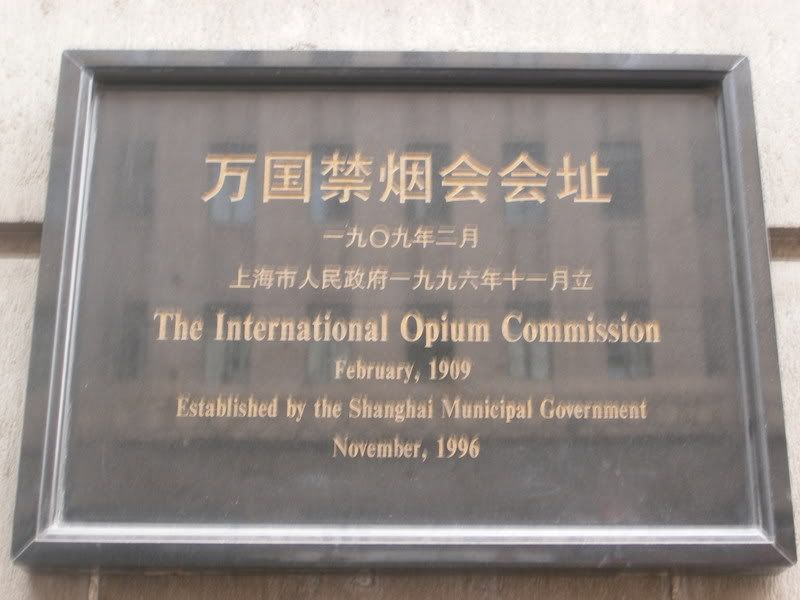
I desperately wanted to see some evidence of the opium hey days of Shanghai in the 1920s. Unfortunately I did not find an opium den, but I found a plaque on a hotel with the word "opium" on it.

Shanghai - hotels

During the first four nights I stayed at the 5 star JC Mandarin on the posh Nanjing Rd West. It was nice but not the best 5 star hotel I’ve stayed in. The lobby had a beautiful building high Chinese mural that bordered the elevator entrance. Housekeeping was very quick to respond to calls. They did not vacuum the carpet or mop the bathroom floor with each daily housekeeping duty, and they did not replace our used towels with new ones. The shower over the bath was low pressure and there was a weird shower mat that left a black stain on the bath. It was the first hotel I’ve stayed in that used shower mats. I thought it was odd and unhygienic. The sink took quite awhile to drain and the air conditioning was not working well. The hotel breakfast was decent but not great. The Bircher muesli, fresh fruit, pastries and bread was good. However, the American breakfast was greasy and bland. I’d give the JC Mandarin 4 stars rather than 5.

JC Mandarin lobby

I then stayed at the “4 star” Dong Hu Hotel in the French Concession. I was supposed to stay for two nights but only tolerated one. Despite the clean sheets and bathroom, the mahogany carpet was dirty and air conditioning noisy. The lobby had a weird smell. I don’t normally trust hotels with an unpleasant lobby smell. The staff’s English was not up to par, but they were still courteous and helpful. I’d give this give this hotel 2.5 stars out of 5.

Finally I checked into the beautiful heritage listed Art Deco Jin Jiang Hotel. It was 1000 yen cheaper than the other 5 star hotels, so I checked the room before reserving a place to make sure it was ok. The room was gorgeous and very, very clean. I immediately booked it. I became intrigued with the hotel after having dinner at the Yin restaurant there the night before. I’m obsessed with Art Deco. All the staff I dealt with, even the bellboy, spoke very good English and they were all very courteous. I returned to my room in the evening to find a “Goodnight” card on my pillow with next day’s weather forecast. My bathroom had a separate bath and shower. The Jin Jiang is definitely worth 5 stars.


I’ve come to the conclusion that I have a 5 star hotel habit. The first time I switched to a 5 star hotel was when I was 10. I hated the red and white tiled motel that my parents chose on our holiday on the Gold Coast. It looked like something out of the set of Problem Child 2. I insisted that I could not stay there even for one night (the toilet seat was red!), so we checked into a 5 star hotel instead. I was happy. Since then, I’ve done this on nearly ever holiday I’ve been on. Sure, I will book a 3 or 4 star hotel first to save money. But they always look cleaner on the internet than in person. I really don’t care about the amenities. I can do without a pool, gym and business centre. I just want to stay in a comfortable room that is spotlessly clean. People with OCD can’t go backpacking. Maybe I should start a backpackers hostel chain for people with OCD.

Shanghai - food

I was most looking forward to eating steamed dumplings. The Shanghai Dumpling House restaurant in Melbourne gave me the impression that Shanghai was renowned for dumplings. The dumplings, otherwise known as xiao long bao, were nice but no better than the dumplings I’ve eaten in Melbourne. I became sick of eating dumplings after two consecutive days of eating them. Although the food was cheap (I bought a bowl of homemade soup noodles for $0.50), it was mostly too salty, oily or sweet.

xiao long bao

Shanghai does not have as much street food variety as Malaysia. The most common finds were chicken wings and Muslim Chinese lamb kebabs. Steamed bun stalls were quite uncommon unfortunately. I found a few spring onion pancake stalls. They crack an egg on the pancake and smother it with chilli. Fried buns were everywhere too. Imagine what would happen if you deep friend something that wasn't meant to be deep fried - that's how I felt about the deep fried buns. It was a thick dough with a hard, not crispy base. I wasn't used to eating food of this texture.

Spring onion pancake stall
The fried dumplings with the weird texture

I observed that not many Shanghainese ate rice to accompany the salty stir fries. I did not understand how they could do without rice to balance out the saltiness of the dishes. All servings were massive and a lot of food would often go to waste.

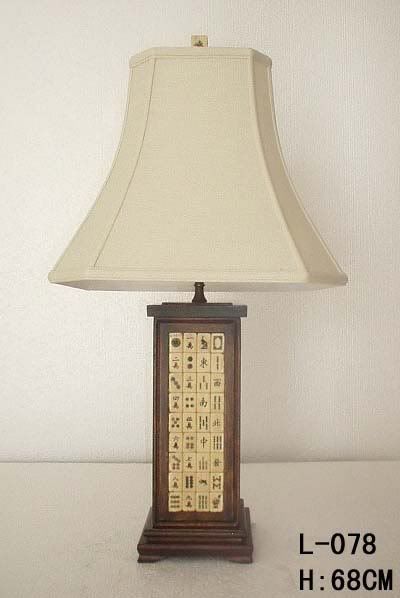
There were many bakeries that sold buns and pastries that made me worry about developing diabetes. I took advantage of the cheap bananas by eating one a day. The tastiest meal I ate was at a Chinese restaurant named Yin. I was apprehensive about going to this restaurant because it was located in a hotel, which meant the food would be less authentic. I liked the place the moment I stepped into it. It was furnished in rich, dark wood and jazz was playing in the background. It had a Manhattan basement jazz bar from the 1920s feel. The menu claimed that they did not use MSG in their cooking and they did not use as much oil and salt as other local restaurants. This suited me, as it was difficult to find a healthy meal in Shanghai. My Chinese friend said that the food at Yin, even though nice, was catered to foreign tastes. And here I was thinking that my taste palette was Asian so I was an authority to tell people where to eat in Melbourne’s Chinatown. Yin had a few of these mahjong lamps, which I loved:

Mahjong lamp

Shanghai - shopping

The Marc Jacobs and Gucci stores across the road from my hotel. Two totally different brand personalities living in harmony next to each other. Marc Jacobs being the sweet, cute, quirky girl and Gucci being the sexy, ball breaking woman.

The only two things that excited me were the Marc Jacobs store and the cheap leather bags. Shanghai is a paradise for fake designer bags, but to get the good quality leather versions you need to venture a bit out of town to Xi Pu market. It consists of two five-storey buildings that have rows and rows of tiny clothing and accessories shops within them. I had never seen that many clothes in my entire life. I didn’t buy any clothes because it was all winter stuff and I felt overwhelmed with all the choice. The clothes on display was mostly tacky, colourful, bad quality embellished sweaters and jeans. The Chinese really love embellished jeans with ugly washes and creases.

tacky embellished jeans

Outside the shopping centre we were approached by a man who showed us a folder of photos of fake designer bags, watches and t-shirts. I refused to go, because I am opposed to fake designer products, but my mum wanted to go so I had to follow. It would have been impossible for us to find each other in the maze of the shopping centre. The man led us through the maze and into one of the tiny stores. The shop keeper pushed the back wall to reveal a small room of fake designer bags. My mum bought about four bags from this shop. The man then carried my mum’s shopping bag for her and took us to another secret room of fake bags. I actually found three uniquely designed leather bags that were not the typical Louis Vuitton, Gucci, Chloe, Hermes, and Fendi rip offs. In typical style, I managed to pick out the two most expensive bags in the store. They were one of a kind designs and were not covered in logos. I hadn’t seen those two bags sold anywhere else. I couldn’t even find them on eBay when I got home. We bargained my bags down to $125 each, which is a bargain for a unique leather bag. My three year search for the perfect leather bag was finally over. My mum bought another six bags from this store. Now we had three massive shopping bags to carry throughout the shopping centre, but the shopping guides carried them for us. They didn’t even ask for money at the end of our shopping journey. We offered to buy them lunch, but they were reluctant to accept it. We bought it anyway so they were forced to eat. I think they are paid commission by the shops.

On Nanjing Road East, the main shopping strip in town, we were also approached by hawkers selling fake bags and watches. My mum followed two of them (she can’t say no to fake bags), and they each led us through dark alleyways and into blackened apartment blocks that were hundreds of years old. They took us to small rooms that hid the fake goods. One shop had a video camera set up in the alley so they could monitor if the police were coming.

Nanjing Road East

Nanjing Road East

Nanjing Road West is where all the international designer shops were. In addition to my favourite Marc Jacobs store, there was Gucci, Hermes; massive Louis Vuiton, Prada and Christian Dior stores; Lagerfeld Gallery, Marni, Missoni, and many other American, European and Japanese couture designers. It was disappointed that the Anna Sui store was not open yet.

In terms of mid-range brands, there was Zara but no Top Shop! H&M was going to open next month. I guess it was good there was no Top Shop, otherwise I would have blown my budget!

The French Concession had rows of cute, slightly upmarket boutiques that featured a range of local and international styles of clothes. Many of the shops stocked clothes that were sourced from Xi Pu market, but sold at four times the price. I found a few boutiques that had international designer factory samples, sold at bargain prices. Of course, most clothes are made in China, so it would be easy to get samples from a range of international designers. I found a Viktor & Rolf jacket for only $90! I doubt it was a fake – Viktor & Rolf are not that well known of a label to justify making fakes. I was really delighted and surprised to find the Alice McCall for Target dress that I liked. Unfortunately the only two for sale were both in size 10.

A few people were selling Groucho Marx style face masks that had a whistle attached to the nose.

Groucho Marx mask

People still balance these things on their shoulders to sell fruit:


I come all the way to China only to find a Jeans West.

Jeans West on Nanjing Road East in Shanghai

Shanghai - beggars

On my first night I walked past one of the most pitiful people I had ever seen. This man suffered from third degree burns. His skin melted into his eyes, so it looked like he had no eyes. His hair was singed off. He hands were burnt off too. He was a real-life vision of what I have nightmares about. In Malaysia I had seen a whole assortment of disfigured beggars, but none as horrific as this poor man. We gave him money. I only give money to severely disabled beggars. Many of the other beggars, especially though with a cute kid in tow, choose to beg and some make more money than white-collar workers. Although, in Malaysia, some of the disabled beggars are forced to beg by gangs. The gangsters drop the disabled beggars off in various locations each morning, then collect the money from the beggars at night. I wouldn’t be surprised if this happened in Shanghai too.

Some of the cute kid beggars were kidnapped from villages. The kids are usually four to six years old and do not understand what they are doing. They think it’s a game. We found a man passed out in several pools of vomit in front of a Japanese restaurant (there was an all you can eat and drink deal). When the coins fell out of his pocket as Trent lifted him off the street, a little girl beggar rushed to pick up the coins, and the old lady with her tried to pickpocket him before an old man beggar stopped her. Just as I was beginning to think that there were genuine beggars in Shanghai, the old man asked Trent for money for helping him to get the drunk guy off the street.

Shanghai - customs

It’s too crowded to say sorry

The streets are packed with rushing people. If the citizens of Shanghai had the custom of apologizing to everybody they bumped into, their mouths wouldn’t get rest. The flow of conversation may be lost if you had to say sorry to every person you bumped into, which is bound to occur at least once every five minutes.

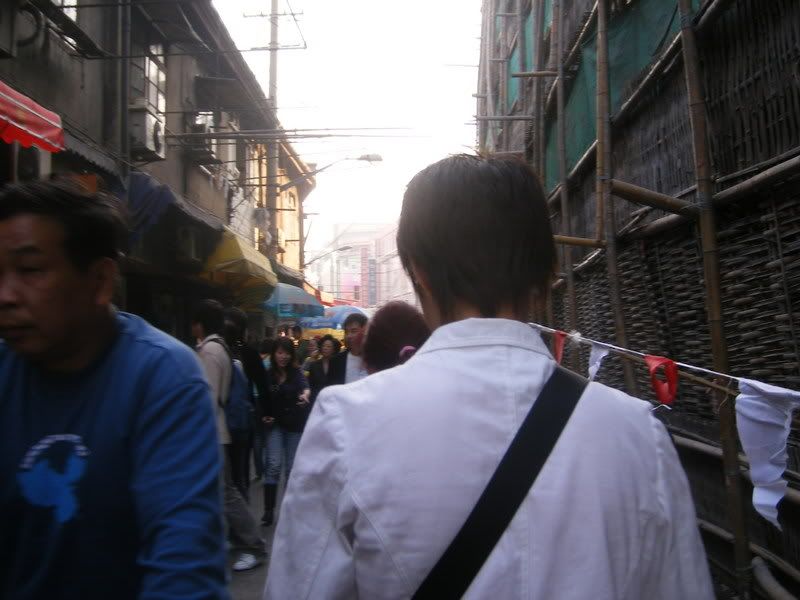
A typical crowded Shanghai street

Cover your mouth when you use a toothpick, says the Shanghai Lonely Planet…

…but you can spit on the ground, even if it’s indoors, and even if it’s carpet. At the Super Brand Mall, a modern eight story shopping centre where you can find one of Shanghai’s two Hooters, a lady at least had the decency to spit in the rubbish bin instead of the polished floor. There is progress for you. A “hhrrrruuuuugggghhhhhh” sound still preceded her spit though.

Photos alone will not do justice in capturing the essence of Shanghai. You need to record the sounds of people spitting and the constant beeping of horns. It’s not as smelly as Malaysia, but it smells like an Asian grocery street or Chinatown in any Western city.

Red means go

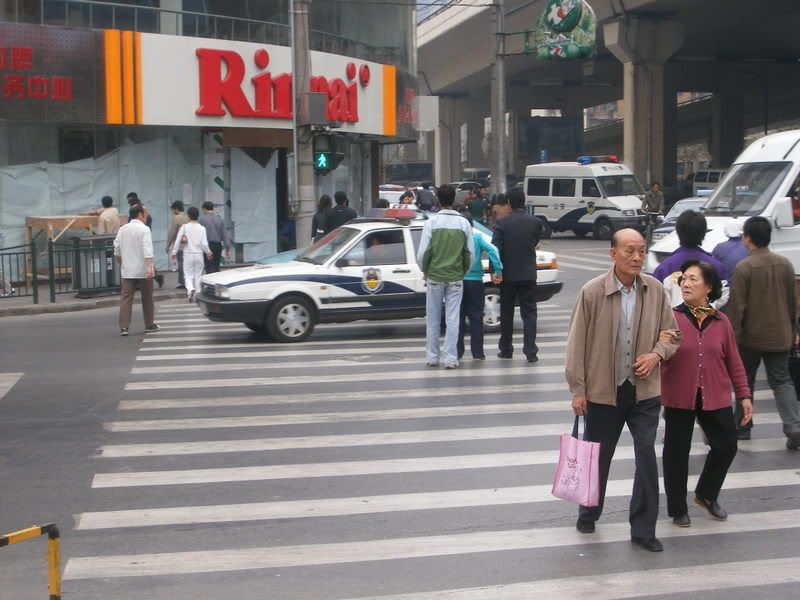
Cars, buses and trucks will NOT stop for pedestrians. This is when your dodgeball skills come in handy. Supposedly, if vehicles had to stop for everyone crossing at a green pedestrian light or zebra crossing, they would be waiting forever because there are so many people crossing the street (duh, China has the largest population in the world). Green pedestrian lights run for longer than they do in Melbourne - at least three times longer than Flinders and Swanston Street crossing, one of the busiest intersections in Melbourne. There is even a timer at each pedestrian crossing. It did feel like pedestrians were given more time to cross the street than the cars though, so maybe that’s why the drivers were so impatient. The locals are desensitised to horns because they are tooted so frequently. So if you are crossing the street and a bus is inching towards you and beeping, just ignore it. I wouldn’t be surprised if crossing the street was one of the most common killers in Shanghai. I couldn’t relax on my trip because I was walking around trying not to get run over or spat on. Walking on foothpaths was not safe either, as motorbikes would often speed onto them to overtake the cars on the street.

Cars going through a green pedestrian crossing.

The proper way of driving in Shanghai is to go as fast as you can while continuously overtaking cars and changing lanes, so you can get to your destination in the quickest time possible. In one taxi ride, the driver attempted to squeeze through two buses that were in ADJACENT LANES. He saw a gap between the buses and took it.

I’ve never been so scared of buses in my life. They speed and take sharp turns. I had the cheaper option of riding in a bus to the airport, but I chose a cab instead. I had too many pretty leather bags to show off back home to risk crashing in a bus in Shanghai on the way to the airport.